


We have seen that nature has built its food chain through evolving the process of photosynthesis to harvest the Sun, but nature is capable of harvesting only small fraction of direct, total solar insolation.
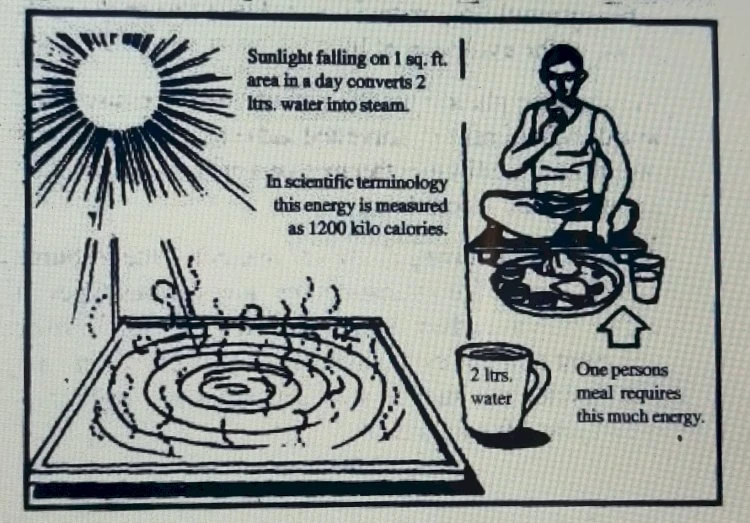
The Sun that reaches our biosphere, reaches at the rate of 2gms Cal./sq.cms./min. or 2K Cal./sq.ft./min. On square meter basis this comes about 14,400 K cal/day. Moreover the amount actually reaching any place any time on any day depends, on latitude, cloud cover, water vapour, and other gases of the atmosphere and also on the season of the year.
Out of this total solar insolation reaching the biosphere different types of plants harvest different (one to one and half) percent of light per day. C4 type plants such as sugarcane, maize can harvest more of the insolent sunlight as their process of harvesting sunlight is more efficient than that of the C3 type plants such as rice and various vegetable crops etc.
Thus the leaves of different plants are seen capable of harvesting only maximum one and half percent or so of the total light energy.