





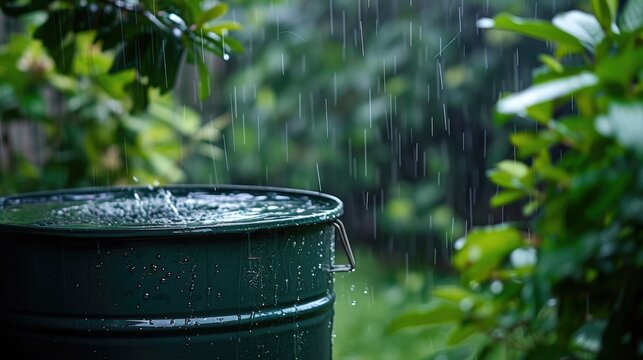
Rainwater Is More Valuable Than Groundwater
Water is one of the most important resources in agriculture. Across many regions, farms depend heavily on borewells and groundwater extraction to meet their irrigation needs. However, it is important to remember a simple truth:
Groundwater is essentially yesterday’s rain.
Every drop of water stored beneath the surface originally fell from the sky. The long-term sustainability of agriculture therefore depends not only on groundwater extraction but also on how effectively rainfall is captured and retained within the landscape.
Understanding the Water Cycle
Rainfall is the primary source of freshwater in most ecosystems.
When rainwater is allowed to infiltrate the soil, it replenishes underground aquifers, supports plant growth, and maintains ecological balance. Healthy landscapes naturally absorb, store, and gradually release water through vegetation, soil, and groundwater systems.
This natural process creates resilience during dry periods and supports long-term water security.
The Challenge of Runoff
Despite receiving substantial rainfall each year, many landscapes struggle with water scarcity.
One of the primary reasons is rapid runoff.
When soil is compacted, exposed, or degraded, rainwater is unable to infiltrate effectively. Instead, it flows across the surface, carrying valuable topsoil and nutrients away from the land.
Within weeks of heavy rainfall, the same area may begin experiencing moisture stress because little water was actually stored in the ecosystem.
The issue is often not the amount of rain received but the amount of rain retained.
Water Harvesting Beyond Storage Tanks
Water harvesting is often associated with tanks and reservoirs, but its true purpose is much broader.
Effective water harvesting focuses on increasing the ability of the land itself to absorb, store, and retain moisture.
A healthy landscape functions like a natural reservoir, holding water within the soil where it can support plants, microorganisms, and groundwater recharge.
The objective is to keep rainfall within the ecosystem for as long as possible.
Practices That Improve Water Retention
Several regenerative farming practices contribute to improved water management.
These include:
- Healthy soil rich in organic matter
- Tree cover and agroforestry systems
- Mulching to reduce evaporation
- Contour bunds and swales
- Farm ponds and water harvesting structures
- Diverse vegetation and ground cover
Together, these practices slow the movement of water, improve infiltration, and increase the landscape’s capacity to retain moisture.
The Regenerative Agriculture Perspective
Regenerative farming views water as part of a larger ecological system.
Instead of focusing solely on irrigation, regenerative practices seek to improve the natural processes that capture and store rainfall.
Healthy soils, active biological communities, and diverse vegetation work together to create landscapes that are more resilient to drought, floods, and changing climatic conditions.
Water security begins with healthy ecosystems.
The Amrut Krushi Perspective
At Amrut Krushi, water conservation is approached through landscape regeneration rather than extraction alone.
Efforts focus on improving soil health, increasing tree cover, enhancing water infiltration, and creating systems that allow rainfall to remain within the landscape.
By treating rainwater as a valuable resource, farms can build resilience while reducing dependence on groundwater over time.
Conclusion
The future of water security does not lie only beneath our feet. It depends on how effectively we manage the rain that falls from the sky.
Every drop of rain that enters the soil contributes to groundwater recharge, healthier ecosystems, and greater agricultural resilience.
By slowing, spreading, and sinking water into the landscape, farmers can create systems that remain productive and sustainable for generations to come.