





Water Harvesting Begins With a Mindset
When people think about water harvesting, they often imagine ponds, trenches, check dams, or storage tanks. While these structures play an important role, they are not where water harvesting truly begins.
Water harvesting starts with a shift in perspective.
Instead of asking, “How can we obtain more water?”, regenerative agriculture encourages a different question:
“How can we lose less water?”
This simple change in thinking transforms the way we manage landscapes, soil, and rainfall.
Rethinking Water Management
Many regions receive significant rainfall each year, yet still experience water shortages during dry periods.
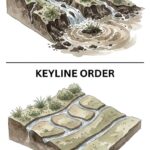
The problem is often not the amount of rain that falls, but how quickly it leaves the landscape.
When water runs off the land instead of infiltrating the soil, valuable moisture is lost before it can benefit plants, recharge groundwater, or support ecological processes.
Effective water harvesting focuses on slowing, storing, and utilizing rainfall where it falls.
The Soil as a Natural Reservoir
One of the most effective water storage systems already exists beneath our feet.
Healthy soil acts like a sponge, absorbing rainfall and gradually releasing it over time.
Soils rich in organic matter and biological activity can hold significantly more water than degraded soils. This stored moisture supports plant growth, improves resilience during dry periods, and contributes to groundwater recharge.
In many cases, improving soil health can be just as important as constructing water-harvesting infrastructure.
Small Actions That Reduce Water Loss
Regenerative farming uses a variety of practices that help retain moisture within the landscape.
These include:
- Mulching to reduce evaporation
- Increasing soil organic matter
- Planting trees to improve infiltration
- Maintaining ground cover
- Building contour-based earthworks
- Reducing soil disturbance
Each intervention helps keep water on the land for a little longer.
While individual improvements may seem small, their combined impact can be substantial.
The Power of Cumulative Change
Water harvesting is often most effective when many small improvements work together.
A healthier soil profile, increased tree cover, better ground protection, and improved landscape design all contribute to greater water retention.
Over time, these changes can lead to:
- Improved soil moisture
- Increased groundwater recharge
- Reduced runoff
- Greater drought resilience
- Enhanced ecosystem health
The cumulative effect of many small actions often produces results far greater than a single large intervention.
The Regenerative Agriculture Perspective
Regenerative agriculture views water as part of a larger ecological system.
Rather than focusing solely on storing water above ground, regenerative practices seek to improve the ability of the landscape itself to capture and retain rainfall.
Healthy soils, vegetation, biodiversity, and thoughtful land management all work together to support long-term water security.
The objective is to create landscapes that naturally hold more water year after year.
The Amrut Krushi Perspective
At Amrut Krushi, water harvesting is approached as a process of landscape regeneration.
Efforts focus on improving soil health, increasing organic matter, enhancing infiltration, and reducing water loss through ecological design.
By combining natural processes with thoughtful management, the landscape becomes increasingly capable of storing and utilizing rainfall effectively.
Every drop retained within the ecosystem contributes to future resilience and fertility.
Conclusion
Water harvesting begins long before a pond is dug or a trench is built.
It begins with the understanding that every drop of rain is valuable and that the most sustainable solution is often to prevent water from leaving the land in the first place.
The most effective water harvesting structure is often the soil itself.
By improving the landscape’s ability to absorb, retain, and utilize rainfall, we create healthier ecosystems, stronger farms, and a more water-secure future.