


Nature Is the Greatest Scientist
Every forest is a living research laboratory that has been conducting experiments for millions of years.
Without human intervention, nature has developed remarkable systems for building fertile soil, conserving water, recycling nutrients, and sustaining biodiversity. Every healthy ecosystem demonstrates solutions that have been refined through countless generations of natural adaptation.
Regenerative agriculture begins by recognizing that nature is not only our environment it is also our greatest teacher.
Learning From Nature
Nature continuously demonstrates how healthy ecosystems function.
Forests thrive without synthetic fertilizers. Rivers shape landscapes without engineering plans. Soil becomes fertile through natural cycles of decomposition and biological activity.
These processes remind us that many of the answers to modern agricultural challenges already exist within natural systems.
The role of a regenerative farmer is to observe these systems and learn from them.
Observation Before Intervention
One of the fundamental principles of Natueco Science is observation before intervention.
Before making changes to the land, it is important to understand:
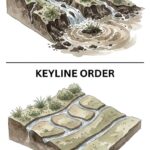
- How water moves across the landscape
- Which plants thrive naturally
- How soil responds to rainfall
- Where biodiversity is strongest
- How natural ecosystems maintain balance
Careful observation helps farmers make decisions that work with nature rather than against it.
Understanding always comes before action.
Every Part of Nature Is a Teacher
Nature teaches through countless small details that often go unnoticed.
A fallen leaf demonstrates nutrient recycling.
An earthworm reveals healthy soil.
A bird indicates improving biodiversity.
Rainfall shows how water moves across the land.
Even insects, fungi, and native plants provide valuable information about the health of an ecosystem.
Every season offers new lessons to those willing to observe carefully.
Research Beyond the Laboratory
Scientific discovery is not limited to laboratories filled with microscopes and instruments.
Research also takes place:
- In healthy forests
- Across working farms
- Beneath living soil
- Around water bodies
- Through careful field observation
Every landscape provides opportunities to test ideas, learn from natural processes, and improve farming practices.
Nature itself is one of the world’s oldest and most successful research institutions.
The Amrut Krushi Perspective
At Amrut Krushi, farming begins with observation and continuous learning.
Every season, every rainfall, every insect, every fallen leaf, and every change in the landscape offers valuable knowledge. Inspired by the principles of Natueco Science, the focus is on understanding natural systems before making decisions about soil health, water conservation, biodiversity, and ecological restoration.
The objective is not to dominate nature but to work alongside it with respect and curiosity.
Conclusion
The greatest discoveries often begin with a curious mind and careful observation.
Nature has spent millions of years refining solutions that support healthy ecosystems. By studying these natural processes, farmers can build more resilient landscapes, healthier soils, and sustainable agricultural systems.
Nature is the greatest scientist and every farm offers an opportunity to learn from its wisdom.