





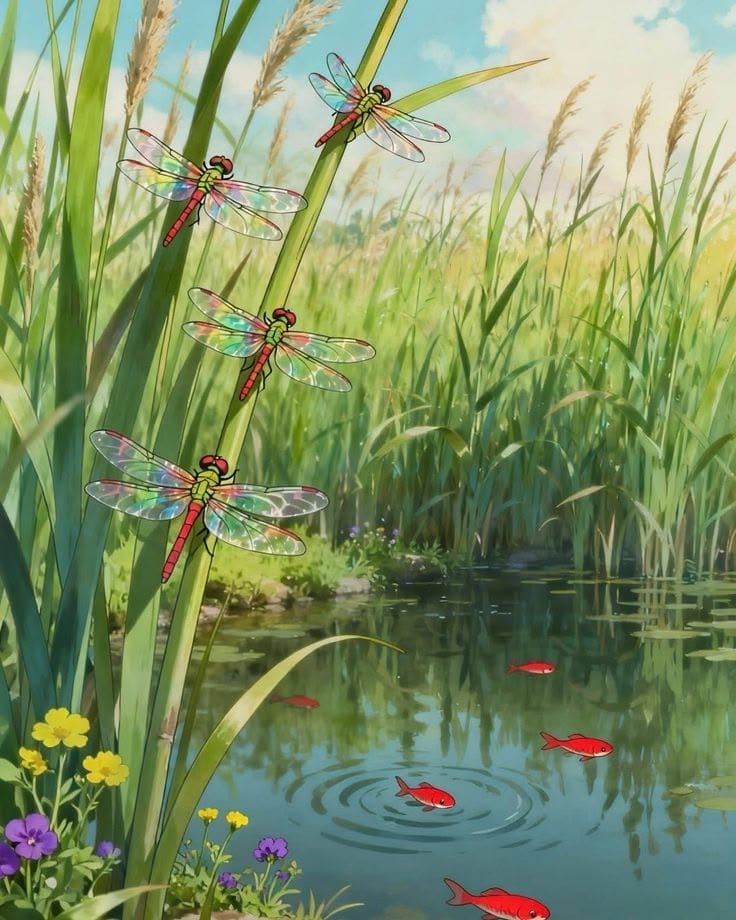
Every Living Creature Has a Role
A butterfly pollinates flowers. An earthworm loosens the soil. A spider helps control insect populations. Birds disperse seeds across the landscape.
In nature, no living creature exists without a purpose. Every organism, whether large or small, contributes to the balance of the ecosystem. Together, these countless interactions create healthy, resilient landscapes that can sustain life for generations.
Regenerative agriculture recognizes the importance of these natural relationships and works to protect them.
Nature Works as a Team
A healthy ecosystem is built on cooperation.
Every species performs a unique role that supports other forms of life.
Some organisms:
- Pollinate flowers and crops
- Improve soil structure
- Recycle organic matter
- Control insect populations naturally
- Disperse seeds
- Support nutrient cycling
Each contribution strengthens the ecosystem and helps maintain its natural balance.
Biodiversity Creates Balance
A farm rich in biodiversity is often healthier and more resilient.
When plants, insects, birds, reptiles, fungi, and microorganisms coexist, they create a balanced environment where natural processes help regulate pests, improve soil fertility, and support plant growth.
Rather than trying to eliminate every insect or wild species, regenerative farming encourages ecological balance.
Life supports life.
Every Species Matters
Even the smallest organisms play an important role.
Earthworms improve soil aeration.
Butterflies and bees pollinate flowers.
Spiders help manage insect populations.
Birds spread seeds and contribute to natural pest control.
Beneficial microorganisms recycle nutrients and build fertile soil.
Removing one part of this network can affect many others.
Healthy ecosystems depend on diversity.
Signs of a Recovering Landscape
One of the clearest signs of ecological restoration is the return of wildlife.
As soil health improves and habitats become more suitable, insects, birds, reptiles, and beneficial microorganisms begin to return naturally.
Their presence indicates that the ecosystem is becoming healthier and more balanced.
A living landscape is a recovering landscape.
The Amrut Krushi Perspective
At Amrut Krushi, biodiversity is welcomed as an indicator of ecological health.
The return of butterflies, birds, earthworms, reptiles, pollinators, and beneficial microorganisms reflects the positive impact of regenerative farming practices. Every species is viewed as an important contributor to the health and resilience of the farm.
The objective is not to create a sterile farming system but a balanced ecosystem where nature can perform its own work.
Conclusion
The healthiest farms are not the quietest. They are full of life.
Every living creature, from the smallest microorganism to the largest tree, plays a role in maintaining ecological balance.
By protecting biodiversity and working with natural systems, regenerative farming creates healthier soils, stronger ecosystems, and a more sustainable future for all.