





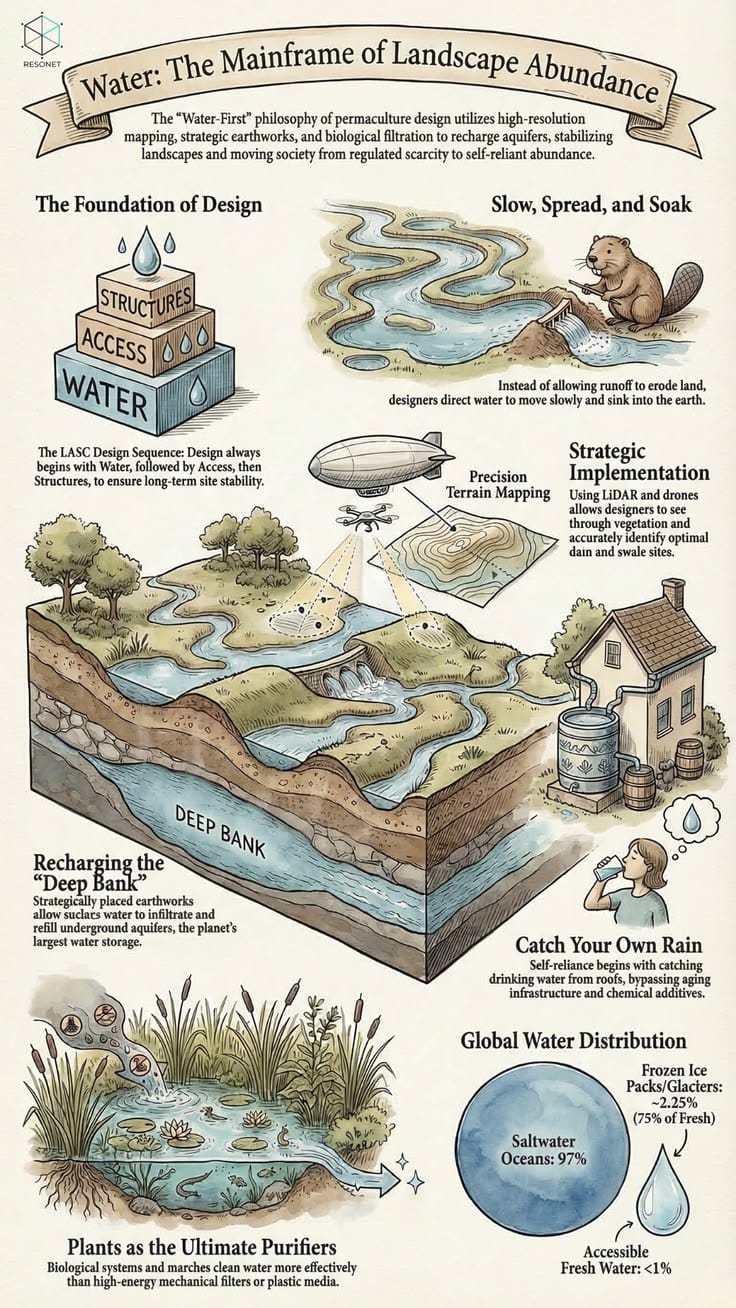
The Journey of Water
A single drop of rain begins an incredible journey.
Where that journey leads depends entirely on the health of the landscape. A well-managed farm welcomes every raindrop, allowing it to nourish the soil, recharge groundwater, and sustain life. A neglected landscape, however, allows precious water to escape before it can provide lasting benefits.
In regenerative agriculture, every drop of rain is treated as a valuable resource.
The Path of a Raindrop
When rain falls on bare and compacted soil, it often flows away quickly.
As it moves across the surface, it can carry away fertile topsoil, reduce soil moisture, and increase erosion. Much of the water is lost before it has the opportunity to benefit the land.
Healthy landscapes create a very different outcome.
Healthy Soil Holds Water
Soil rich in organic matter acts like a natural sponge.
Tree roots, vegetation, mulch, and living soil slow the movement of water and allow it to soak deep into the ground.
As rainwater infiltrates the soil, it:
- Nourishes beneficial microorganisms
- Supports healthy root systems
- Recharges groundwater
- Reduces soil erosion
- Improves long-term soil moisture
- Sustains plants during dry periods
Every drop stored beneath the surface strengthens the resilience of the landscape.
Working With Nature
Nature has perfected the water cycle over millions of years.
Forests rarely experience rapid runoff because vegetation, leaf litter, and healthy soil work together to capture and store rainfall.
Regenerative farming follows these natural principles by protecting the soil, increasing vegetation cover, and improving the land’s ability to absorb water naturally.
The objective is not simply to collect rainwater but to help the entire landscape retain it.
Building Water-Resilient Farms
Water conservation is one of the foundations of sustainable agriculture.
Practices such as tree planting, mulching, contour bunding, composting, and restoring soil health increase the land’s capacity to hold water throughout the year.
These methods help farms remain productive even during periods of limited rainfall.
A healthy landscape becomes its own water storage system.
The Amrut Krushi Perspective
At Amrut Krushi, every effort is made to respect the journey of every raindrop.
Through soil restoration, tree plantation, organic matter management, contour bunding, and rainwater harvesting, we work to slow the movement of water, spread it across the landscape, and allow it to sink deep into the soil where it can continue supporting life.
Every drop conserved today strengthens the future of the land.
Conclusion
Every landscape tells the story of how it treats water.
By improving soil health and working with nature, we can ensure that rainfall becomes a source of life rather than runoff.
The future of farming depends on respecting the journey of every raindrop.