





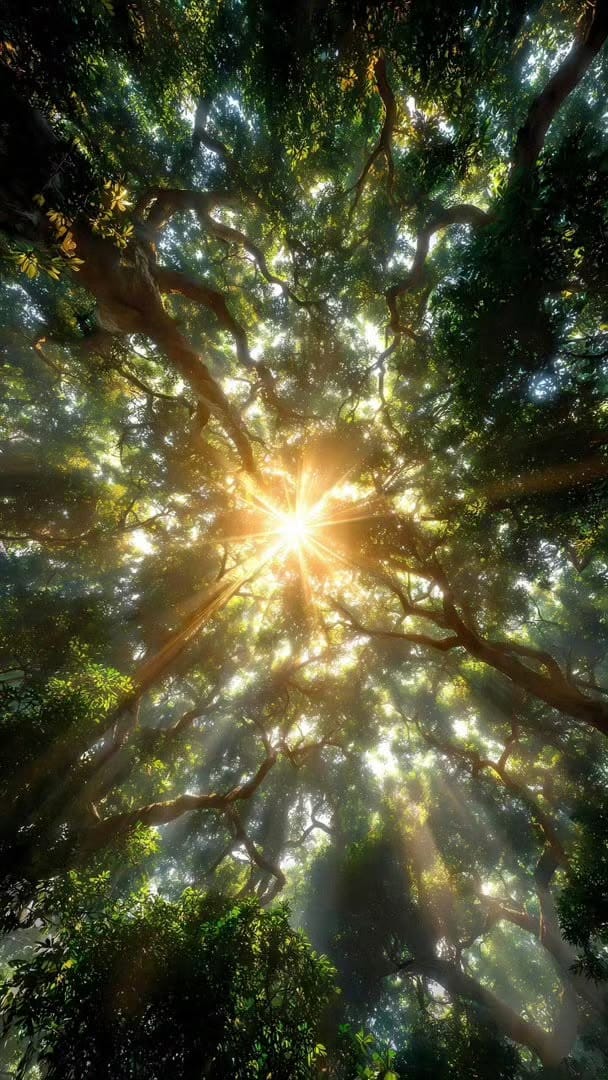
Biomass Is Stored Sunlight
Every green leaf captures sunlight through photosynthesis and converts that energy into biomass.
Grass, leaves, branches, crop residues, roots, and fruits are all forms of stored solar energy. What may appear to be ordinary plant material is actually a valuable source of energy and nutrients that can be returned to the soil.
In regenerative farming, biomass is not waste. It is one of nature’s most valuable resources.
Plants Capture and Store Sunlight
Green plants use sunlight to produce the energy they need to grow.
As plants develop, this captured energy becomes stored in their leaves, stems, roots, branches, and fruits. When these materials return to the soil, the energy and nutrients they contain become part of the natural cycle of regeneration.
Every plant carries stored sunlight back into the ecosystem.
Biomass Feeds Soil Life
When plant material reaches the soil, microorganisms, earthworms, fungi, and other decomposers begin breaking it down.
This process:
- Feeds soil microorganisms
- Adds organic matter
- Improves soil structure
- Supports earthworms and fungi
- Helps recycle nutrients
- Gradually builds humus
- Improves moisture retention
Through this natural process, stored solar energy is transformed into healthy, fertile soil.
Nature Wastes Nothing
In a healthy ecosystem, nothing valuable is thrown away.
Fallen leaves become food for microorganisms.
Dead grass becomes organic matter.
Branches become habitat and eventually return nutrients to the soil.
Crop residues become resources for future growth.
Nature continuously recycles stored energy, allowing one generation of plants to support the next.
Biomass Is an Asset
A farm that produces and recycles biomass is continuously generating its own resources.
Pruning provides branches.
Trees provide leaves.
Crops provide residues.
Grass provides organic material.
Instead of removing these resources from the farm, they can be returned to the soil and used to build fertility.
The more biomass a farm produces and recycles, the stronger its natural fertility cycle becomes.
The Amrut Krushi Perspective
At Amrut Krushi, biomass is treated as one of the farm’s greatest assets.
Every pruning, every fallen leaf, and every harvest residue becomes an opportunity to enrich the soil. By keeping biomass within the farm ecosystem, we support soil life, improve fertility, conserve moisture, and strengthen the natural processes that sustain the land.
Biomass is not something to discard. It is stored sunlight that can be invested back into the soil.
Conclusion
Every green leaf is a small storehouse of solar energy.
When biomass returns to the soil, that stored energy feeds microorganisms, earthworms, fungi, and future plant growth. The cycle continues, building fertility season after season.
The richest farms are those that recycle the most sunlight.