





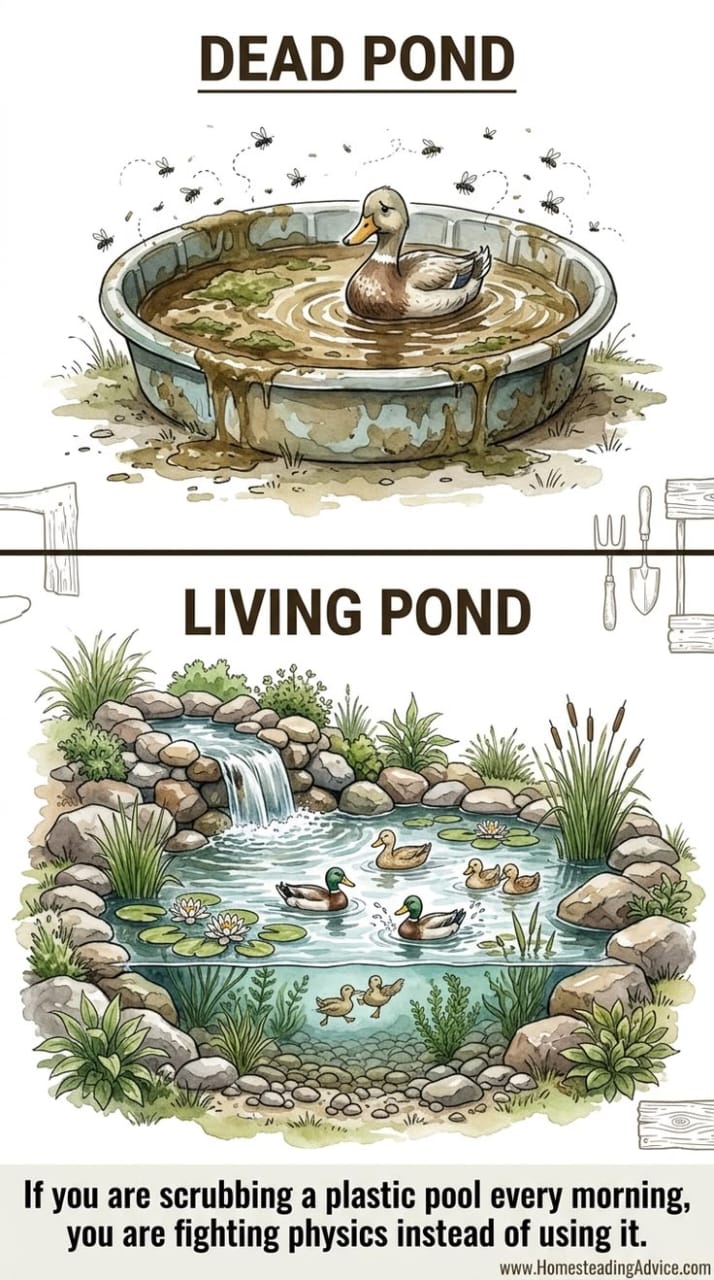
A Pond Is More Than Water
A pond is not simply a place to store rainwater.
It is a living ecosystem that can support plants, animals, microorganisms, and countless ecological interactions. When water is retained on the landscape, life naturally begins to gather around it.
Even a small pond can become an important part of a healthy and resilient farm.
A Pond Creates Habitat
A pond provides water and shelter for many forms of life.
It can become home to:
- Frogs and other amphibians
- Dragonflies and beneficial insects
- Aquatic plants
- Birds and other wildlife
- Fish and other aquatic organisms
- Countless microorganisms
Each of these organisms contributes to the ecological balance of the farm.
Water Supports More Than Crops
Stored water has benefits that extend beyond irrigation.
A healthy pond can provide wildlife with water during dry periods, support surrounding vegetation, and create a habitat where different species can interact.
The presence of water can also influence the local microclimate and create conditions that support greater biodiversity.
A pond becomes part of the wider ecosystem rather than remaining an isolated water source.
Supporting Groundwater Recharge
When water remains on the landscape for longer periods, it has more opportunity to gradually infiltrate into the surrounding soil.
This can contribute to groundwater recharge and improve moisture availability within the landscape.
Healthy soil, vegetation, and water bodies work together to create a more effective natural water cycle.
Designing Water Bodies as Ecosystems
A pond can be designed to support life rather than function only as a storage tank.
Vegetation around the water, healthy soil, natural edges, and diverse habitats can encourage wildlife and strengthen ecological processes.
When water bodies are integrated thoughtfully into a farm, they become valuable parts of the regenerative landscape.
The Amrut Krushi Perspective
At Amrut Krushi, water bodies are designed as living ecosystems rather than storage tanks.
A pond is viewed as an opportunity to support biodiversity, conserve rainwater, provide habitat, and strengthen the natural water cycle. By welcoming water into the landscape, we create conditions where many forms of life can flourish.
Conclusion
A pond is more than water.
It is a habitat, a source of life, and an important part of a healthy ecosystem.
Even a small pond can transform the ecology of an entire farm.
When water is welcomed, life follows.