


Observation Before Action
One of the most valuable principles in Natueco Science is simple but powerful: observe before you act.
In agriculture, every piece of land has its own character. Water follows certain paths, sunlight reaches different areas at different times, winds move across the landscape, and soil conditions vary from one place to another. Understanding these natural patterns before taking action can lead to better decisions and more sustainable outcomes.
Learn From the Land First
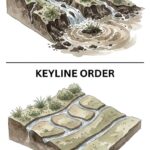
Before digging a pond, observe how water naturally moves across the land. Notice where rainwater collects, where it flows, and where it disappears.
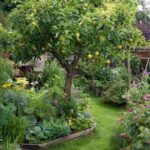
Before planting a tree, observe the availability of sunlight, the direction of wind, moisture levels, and the condition of the soil. These observations can help determine whether a particular location is suitable for the plant.
The land itself provides valuable information when we take the time to notice it.
Understand the Problem Before Solving It
Many agricultural problems cannot be solved effectively by addressing only what is visible on the surface.
Before trying to correct a problem, it is important to understand why it exists. Is the soil losing moisture? Is water flowing away too quickly? Has biodiversity declined? Are plants struggling because of their location or growing conditions?
Observation helps reveal the relationships behind a problem rather than encouraging quick solutions that may create new problems elsewhere.
Nature Rewards Careful Observation
Nature is constantly communicating through changes in plants, soil, water, insects, birds, and other forms of life.
A farmer who observes carefully can recognize these signals and make decisions based on what the land actually needs. This creates a relationship with the farm that is based on understanding rather than assumption.
Sometimes, the most important step forward is to pause and look more carefully.
Observation as the Beginning of Experimentation
At Amrut Krushi, every experiment begins with patient observation.
Instead of immediately imposing an idea on the land, observation helps identify existing conditions and natural patterns. These insights can then guide experiments and allow farmers to learn from the results.
This approach makes agriculture a continuous process of learning, testing, observing, and adapting.
Working With Nature, Not Against It
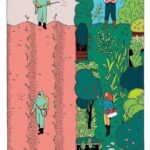
Observation encourages us to work with the natural characteristics of the land rather than forcing the land to fit a predetermined plan.
When decisions arise from a deeper understanding of soil, water, plants, climate, and biodiversity, agricultural practices can become more responsive and regenerative.
Good decisions do not always begin with action. Often, they begin with attention.
Conclusion
Observation is one of the simplest yet most powerful tools available to a farmer.
Before digging, planting, changing, or solving, take time to understand. The land has its own patterns, relationships, and signals. When we learn to observe them carefully, our actions become more thoughtful and better aligned with nature.
Observe first. Understand deeply. Then act.