





A Tree Gives More Than Fruit
When we plant a fruit tree, we often think about the harvest it will provide. While fruits are valuable, they are only one of the many gifts a tree offers.
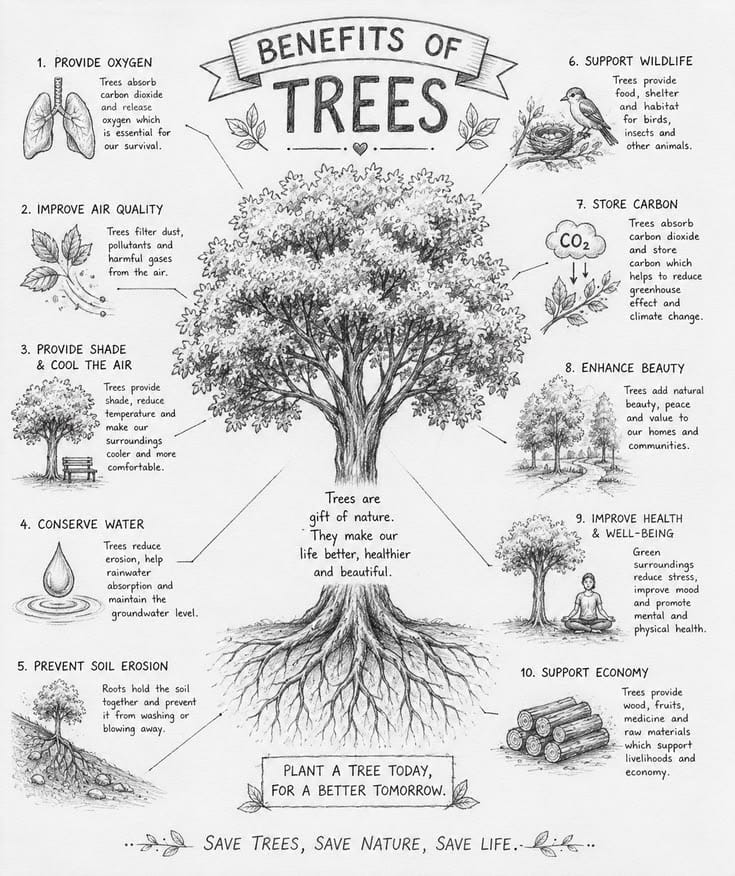
A single tree supports life in countless ways. It provides shade, improves soil health, stores carbon, attracts pollinators, and creates habitats for wildlife. Long before it bears fruit, a tree is already contributing to the health of the environment.
In regenerative agriculture, every tree is valued as an essential part of a thriving ecosystem.
Nature’s Most Generous Gift
Trees give continuously throughout their lives.
They ask for little but provide benefits that extend far beyond their own growth. Their presence improves the surrounding environment for plants, animals, and people alike.
A healthy tree enriches the landscape every day.
How Trees Support Life
Trees contribute to the ecosystem in many important ways.
They:
- Provide shade for people, animals, and crops
- Produce flowers that feed bees, butterflies, and other pollinators
- Offer nesting sites and shelter for birds
- Strengthen soil through deep root systems
- Return organic matter to the soil through fallen leaves
- Help conserve moisture and reduce soil erosion
- Improve air quality by absorbing carbon dioxide and releasing oxygen
Each of these contributions strengthens the natural balance of the ecosystem.
A Tree’s Purpose Continues
Even after the life of a tree comes to an end, its contribution does not stop.
Fallen branches and decaying wood become habitats for insects, fungi, and microorganisms. As the wood slowly decomposes, it returns valuable nutrients to the soil and supports the next generation of life.
In nature, nothing is wasted.
Every stage of a tree’s life has ecological value.
Trees Build Healthy Landscapes
A landscape filled with trees is more resilient.
Trees improve biodiversity, regulate local temperatures, support wildlife, reduce the impact of heavy rainfall, and help recharge groundwater. They create environments where both natural ecosystems and agricultural systems can flourish together.
Planting and protecting trees is an investment in the future of the land.
The Amrut Krushi Perspective
At Amrut Krushi, every tree is valued not only for its produce but for the life it supports.
Each tree contributes to healthier soil, richer biodiversity, improved water conservation, and a balanced ecosystem. By nurturing trees, we strengthen the natural relationships that sustain regenerative agriculture and create healthier landscapes for future generations.
Conclusion
A tree gives far more than fruit.
It provides shelter, nourishment, habitat, cleaner air, healthier soil, and countless ecological benefits throughout its lifetime.
By planting and caring for trees, we invest in a future where people, wildlife, and nature thrive together.
Every tree is a living gift that continues to give, season after season.