





Biomass: Nature’s Greatest Gift
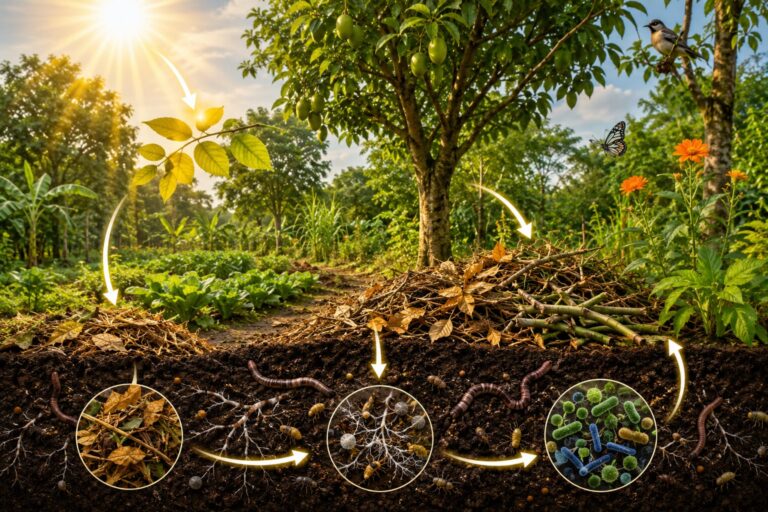
Sunlight falls on every leaf, and through photosynthesis, plants transform that energy into biomass.
Leaves, grasses, crop residues, branches, and roots are all forms of stored sunlight. What may appear to be ordinary plant material is actually a valuable resource that can continuously support the health of the land.
In regenerative farming, biomass is not waste. It is wealth.
Biomass Stores Nature’s Energy
Plants capture sunlight and convert it into organic matter.
As plants grow, they store energy in their leaves, stems, roots, and branches. When this material returns to the soil, it becomes part of a natural cycle that supports countless forms of life.
Every piece of biomass carries energy and nutrients that can be returned to the land.
Feeding the Soil
When biomass is added to the soil, microorganisms and other soil organisms begin breaking it down.
This process helps to:
- Feed beneficial microorganisms
- Improve soil structure
- Increase moisture retention
- Add organic matter
- Recycle nutrients
- Build long-term soil fertility
Over time, regular biomass recycling creates healthier and more resilient soil.
Nothing Needs to Be Wasted
In nature, fallen leaves, dry grass, branches, and dead plants are not considered waste.
They become food for microorganisms, fungi, insects, and other decomposers. As they break down, their nutrients return to the soil and support new growth.
Regenerative farming follows this same natural cycle by keeping valuable biomass within the farm ecosystem.
Biomass Creates Self-Sustaining Farms
The more biomass a farm can produce and recycle, the less it needs to depend on external sources of fertility.
Trees produce leaves.
Crops produce residues.
Grass produces organic matter.
Pruning produces branches.
All of these materials can be returned to the soil and used to build fertility.
This creates a continuous cycle in which the farm produces many of the resources it needs to remain healthy.
The Amrut Krushi Perspective
At Amrut Krushi, every pruning, every fallen leaf, and every handful of dry grass is seen as an opportunity to enrich the land.
Instead of removing valuable organic material from the farm, biomass is returned to the soil wherever possible. This supports soil life, improves fertility, conserves moisture, and strengthens the natural cycles that keep the ecosystem productive.
The goal is to create a farm where fertility is continuously generated and recycled within the landscape.
Conclusion
Biomass is one of nature’s greatest gifts.
Every leaf, branch, root, and piece of plant residue represents stored sunlight that can be returned to the soil and transformed into fertility.
The more biomass we produce and recycle, the healthier, richer, and more self-sustaining the farm becomes.