
Every Compost Heap Tells a Story
A compost heap may look like a simple pile of organic material, but beneath its surface, a remarkable transformation is taking place. Millions of microorganisms and small organisms work together to break down organic matter and return its nutrients to the soil.
What appears to be waste is actually part of a natural cycle of decomposition, transformation, and renewal.
A Living Community Inside the Compost Heap
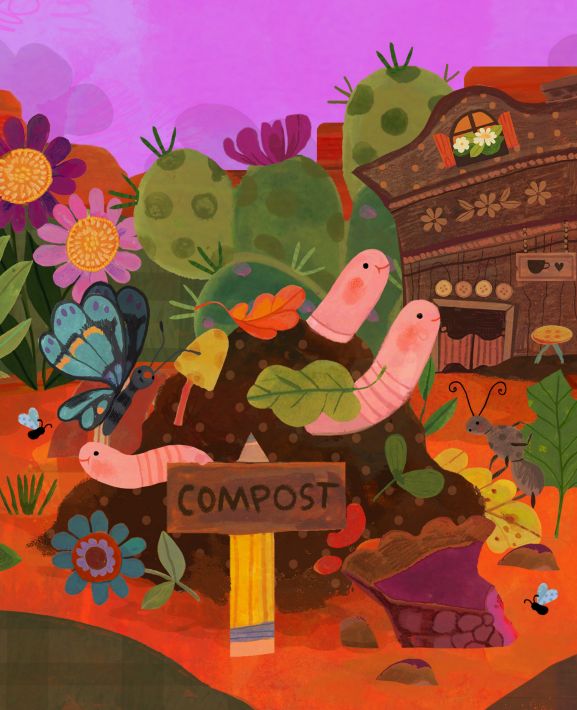
A compost heap is a living ecosystem. Different organisms contribute at different stages of decomposition.
Bacteria are among the first organisms to begin breaking down soft and easily decomposable materials. As the process continues, fungi help decompose tougher and more complex materials, including woody plant matter.
Earthworms and other soil organisms further process the decomposing material, helping transform it into a stable and nutrient-rich form of organic matter.
Each organism has a role in this natural process.
Heat Is a Sign of Activity
A healthy compost heap can generate heat as microorganisms actively break down organic materials.
This heat is a result of biological activity. As microorganisms consume and transform organic matter, energy is released in the form of heat.
Over time, the intensity of this activity changes as easily decomposable materials are consumed and the compost gradually becomes more stable.
From Organic Waste to Humus
The most remarkable part of composting is the transformation that takes place over time.
Leaves, crop residues, food scraps, and other organic materials that might otherwise be discarded can gradually become valuable organic matter. Through decomposition, these materials are transformed into humus, which can contribute to healthier and more fertile soil.
Yesterday’s leftovers can therefore become tomorrow’s foundation for growth.
Composting Completes the Natural Cycle
In nature, organic matter does not simply disappear. Fallen leaves, dead plants, and other organic materials are continuously broken down and returned to the ecosystem.
Composting works with this same principle. Instead of treating organic material as something that must be removed, we can return it to the cycle of life.
This reduces waste while creating a resource that can support the soil.
The Amrut Krushi Perspective
At Amrut Krushi, composting is viewed as one of nature’s greatest recycling systems.
The process reminds us that what we call waste may simply be a resource in the wrong place. By allowing organic materials to decompose naturally, we support the organisms responsible for transforming them and return valuable organic matter to the soil.
Composting is therefore more than a waste management practice. It is a way of participating in nature’s continuous cycle of renewal.
Creating New Life From What Remains
Every compost heap tells a story of transformation.
What begins as discarded organic material becomes food for microorganisms, nourishment for the soil, and eventually support for new plant growth.
When we compost, we are not simply disposing of waste. We are creating the conditions for new li