

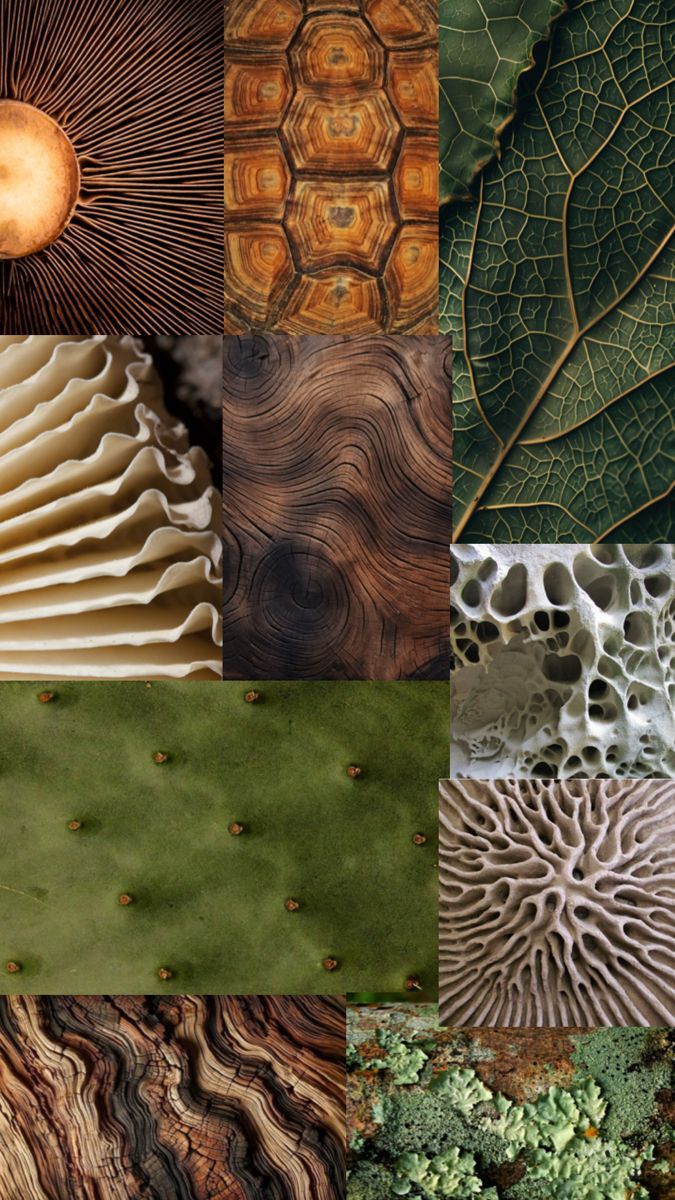
Nature Does Not Grow in Straight Lines
Walk through a forest and you will rarely find straight rows, perfect spacing, or uniform heights.
Nature operates according to principles of diversity, adaptation, and balance rather than rigid patterns. Different species grow together, each occupying a unique role within the ecosystem. Some plants grow rapidly, while others develop slowly over decades. Some thrive in full sunlight, while others flourish beneath the shade of larger trees.
This complexity is not a flaw. It is one of nature’s greatest strengths.
The Power of Diversity
Natural ecosystems are built upon diversity.
A forest may contain trees, shrubs, climbers, grasses, fungi, insects, birds, and countless microorganisms interacting in a web of relationships. Each organism contributes to the health and stability of the system.
This diversity creates resilience because no single species carries the entire burden of supporting the ecosystem.
When environmental conditions change, diverse systems are often better able to adapt and recover.
Why Uniformity Has Limitations
Modern agriculture often favors uniformity.
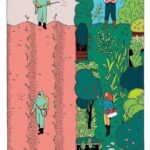
Straight rows, identical crops, and standardized management practices can simplify operations and improve efficiency. However, highly uniform systems can also become vulnerable.
Challenges may include:
- Increased pest and disease pressure
- Reduced biodiversity
- Greater dependence on external inputs
- Lower ecological resilience
- Increased sensitivity to environmental stress
When every plant performs the same role, the entire system may be affected by a single disturbance.
Nature demonstrates that resilience often comes from diversity rather than uniformity.
Learning From Natural Ecosystems
Regenerative agriculture draws inspiration from the patterns found in nature.
Rather than replicating the uniform structure of industrial systems, regenerative approaches seek to create productive landscapes that also support ecological function.
Examples include:
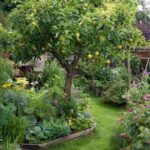
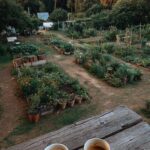
- Mixed plantings
- Food forests
- Agroforestry systems
- Multi-layered vegetation
- Biodiversity-focused farm designs
These approaches mimic natural ecosystems while still providing food, fiber, and other valuable resources.
The Benefits of Layered Systems
In nature, different plants occupy different layers of the landscape.
Tall trees form the canopy.
Smaller trees occupy the understory.
Shrubs, herbs, ground covers, and root crops fill additional niches.
This layered structure helps:
- Improve resource use efficiency
- Increase biodiversity
- Enhance soil health
- Support pollinators and wildlife
- Improve resilience to environmental stress
By utilizing space both vertically and horizontally, ecosystems become more productive and stable.
The Amrut Krushi Perspective
At Amrut Krushi, diversity is viewed as a key component of ecological regeneration.
Trees, shrubs, herbs, ground covers, microorganisms, and wildlife all contribute to the health of the landscape. By encouraging a variety of species and ecological interactions, the farm becomes more resilient and better equipped to adapt to changing conditions.
The goal is not only to grow crops but also to strengthen the relationships that support long-term ecosystem health.
Conclusion
Nature teaches us that abundance often emerges from diversity rather than uniformity.
The complexity found in forests and natural ecosystems is not random. It is the result of countless relationships working together to create stability, productivity, and resilience.
By learning from these patterns and applying them through regenerative farming practices, we can create landscapes that are both productive and ecologically healthy.
Nature does not grow in straight lines—and perhaps that is one of its greatest lessons.