


Regeneration Begins With Observation
One of the most powerful tools available to any farmer costs nothing: observation.
Before making changes to a landscape, it is essential to understand how the natural systems already function. Every piece of land has its own patterns, rhythms, and characteristics that influence its productivity and resilience.
Observation allows farmers to learn directly from the environment rather than relying solely on assumptions or generalized recommendations. By paying close attention to the landscape, valuable insights emerge that can guide more effective and sustainable decisions.
Understanding the Language of the Land
Nature is constantly communicating through visible and invisible signals.
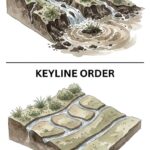
Water follows predictable pathways across the landscape. Sunlight creates patterns of growth and shade. Plants establish themselves in locations where conditions suit them best. Wildlife responds to the availability of food, water, and shelter.
Careful observation helps reveal these relationships and provides a deeper understanding of how the ecosystem functions as a whole.
Before introducing new interventions, it is important to first understand what the land is already telling us.
Patterns That Reveal Valuable Insights
Observation often uncovers information that cannot be learned from books alone.
For example:
- A patch of vigorous grass may indicate moisture accumulation.
- Bird activity can reveal sources of food, nesting areas, and shelter.
- Certain weeds may provide clues about soil conditions.
- Areas of poor plant growth may highlight drainage or fertility issues.
- Wildlife movement can reveal natural pathways through the landscape.
These observations help farmers make decisions that work with natural processes rather than against them.
Observation as the Foundation of Regenerative Farming
Regenerative farming begins by listening to the land.
Instead of immediately applying solutions, regenerative farmers first seek to understand the unique characteristics of their environment. This approach reduces unnecessary interventions and encourages practices that support natural ecosystem functions.
Observation helps identify opportunities to:
- Improve water management
- Enhance soil health
- Increase biodiversity
- Reduce erosion
- Support long-term ecological resilience
The more accurately a landscape is understood, the more effective regenerative practices become.
Learning Beyond Books and Theory
Books, courses, and expert guidance provide valuable knowledge, but every landscape is different.
Conditions such as climate, soil type, topography, vegetation, and wildlife vary from one location to another. Direct observation helps bridge the gap between theory and real-world conditions.
The land itself becomes a teacher, offering lessons that are unique to each farm and ecosystem.
The Amrut Krushi Perspective
At Amrut Krushi, observation is considered an ongoing practice rather than a one-time activity.
The landscape is constantly changing through seasonal cycles, weather patterns, plant growth, and ecological interactions. Each change provides new information and opportunities for learning.
By continuously observing and adapting, farmers can make better decisions that strengthen both productivity and environmental health.
Conclusion
Regeneration begins with understanding, and understanding begins with observation.
The landscape is constantly communicating through patterns of water, soil, plants, and wildlife. Those who take the time to observe carefully gain insights that cannot be obtained in any other way.
The more carefully we observe nature, the more intelligently we can work alongside it. By listening to the land before attempting to change it, we create the foundation for truly regenerative and resilient farming systems.