




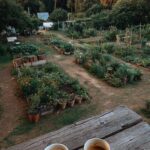

Regeneration Starts With Hope
Environmental challenges can sometimes feel overwhelming. Soil degradation, water scarcity, biodiversity loss, and climate uncertainty are among the most pressing concerns facing communities around the world.
The scale of these challenges can make positive change seem difficult. Yet every successful regenerative project begins with a simple but powerful belief:
Improvement is possible.
Hope is often the first step in the journey toward restoration.
Seeing Possibility Where Others See Problems
Many of the world’s most inspiring restoration projects began on degraded land that appeared beyond recovery.
Over time, landscapes once considered barren have been transformed into thriving ecosystems.
A barren patch of land can become a food forest.
A seasonal stream can flow longer.
Wildlife can return.
Soil can recover.
Communities can reconnect with nature.
These transformations remind us that nature possesses an extraordinary ability to heal when given the right conditions and support.
Hope Must Be Accompanied by Action
Hope alone does not regenerate landscapes.
Action does.
However, hope provides the motivation and energy needed to begin. It encourages people to invest time, resources, and effort into long-term solutions even when results are not immediately visible.
Every regenerative journey starts with a decision to take action despite uncertainty.
Progress is created through consistent effort over time.
Small Actions Create Big Change
Landscape restoration is often built through many small actions working together.
These actions may include:
- Planting trees
- Conserving rainwater
- Building healthy soils
- Recycling organic matter
- Supporting biodiversity
- Educating and inspiring communities
Individually, these efforts may appear modest. Collectively, they have the power to transform ecosystems and strengthen resilience.
Every positive action contributes to a larger process of regeneration.
The Power of Community
Regeneration is rarely the work of a single individual.
Meaningful change often occurs when farmers, students, volunteers, researchers, and local communities work together toward a common goal.
Shared knowledge, collective effort, and long-term commitment can accelerate restoration while creating stronger connections between people and nature.
The movement toward regeneration grows stronger every time another person chooses to participate.
The Amrut Krushi Perspective
At Amrut Krushi, regeneration is viewed as both a practical process and a source of optimism.
Every tree planted, every drop of water conserved, every handful of compost applied, and every person inspired becomes part of a larger effort to restore ecological balance.
The focus is not only on solving problems but also on creating opportunities for healthier landscapes and stronger communities.
Each small step contributes to a more resilient future.
Conclusion
Regeneration starts with the conviction that positive change is not only necessary—it is achievable.
While environmental challenges are real, they do not define the future. The choices we make today have the power to restore ecosystems, strengthen communities, and create lasting benefits for generations to come.
Hope provides the vision. Action creates the change.
Together, they form the foundation of regeneration.