




Soil & Water Regeneration
Water is one of the most valuable resources in agriculture, yet many farming challenges are not caused by a lack of rainfall. More often, they result from an inability to capture, store, and effectively use the water that nature provides.
Rainwater is not always a scarcity problem. In many cases, it is a storage problem.
During intense rainfall events, water often rushes across compacted or degraded land, carrying valuable topsoil with it. Within a few weeks, the same landscape may begin experiencing moisture stress despite having received significant rainfall.
The solution lies in improving the land’s ability to absorb, retain, and slowly release water over time.
Healthy Soil Is Nature’s Reservoir
Healthy soil functions like a sponge.
When soil contains adequate organic matter, active biological communities, and strong root systems, it can capture and store large amounts of water beneath the surface.
This stored moisture becomes available to plants long after rainfall has ended.
Benefits of healthy, water-retentive soil include:
- Reduced runoff
- Improved drought resilience
- Better plant growth
- Increased groundwater recharge
- Reduced soil erosion
- Enhanced ecosystem stability
The healthier the soil, the greater its capacity to manage water naturally.
The Connection Between Soil and Water
Soil and water regeneration are deeply interconnected.
Healthy soils support better water infiltration, while adequate moisture supports soil biology and plant growth. Together, they create a positive cycle that strengthens ecosystem resilience.
Key elements that improve both soil and water health include:
- Organic matter accumulation
- Diverse root systems
- Active microbial life
- Reduced soil disturbance
- Continuous ground cover
These factors work together to create landscapes that are more productive and sustainable.
Strategies for Water Retention
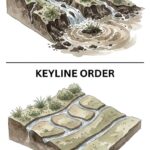
Regenerative farming focuses on slowing down and storing rainfall where it falls.
Several practices contribute to this goal:
Water Harvesting Structures
Swales, ponds, trenches, and other water-harvesting systems help capture rainfall and increase infiltration.
Mulching
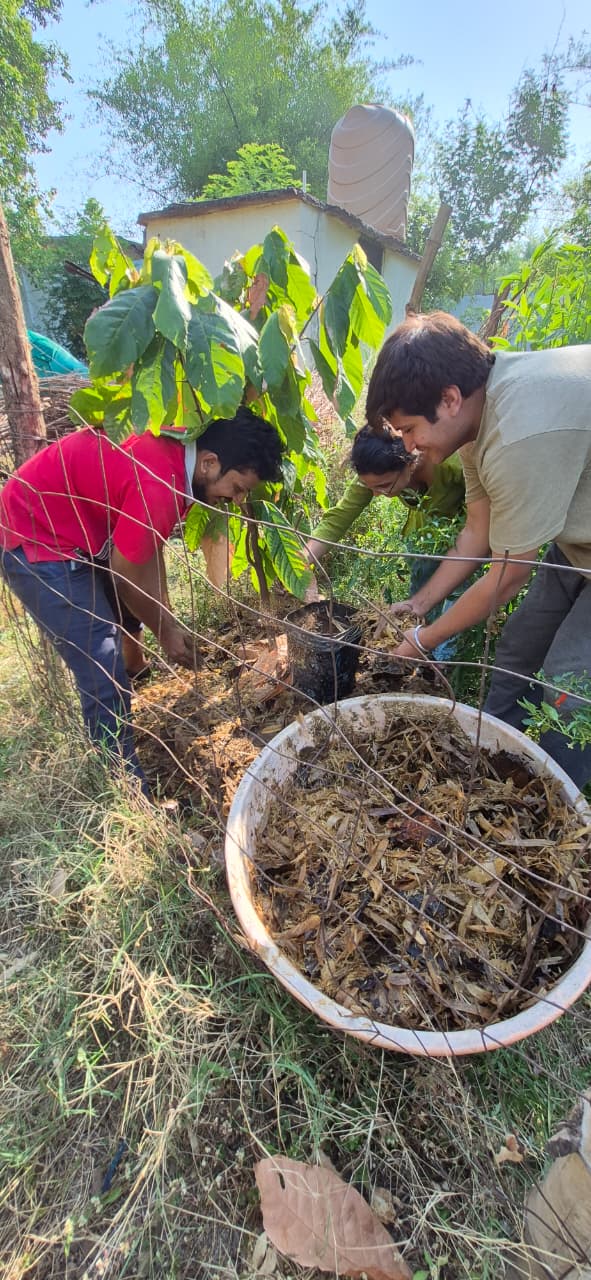
Organic mulch protects the soil surface, reduces evaporation, and improves moisture retention.
Tree Cover
Trees improve infiltration, stabilize soil, and contribute organic matter through leaf fall.
Soil Regeneration
Building soil organic matter increases the soil’s ability to hold water and support biological activity.
When combined, these practices significantly improve the landscape’s capacity to absorb and store rainfall.
Every Drop Matters
Every drop of water that enters the soil becomes an investment in future fertility.
Stored moisture supports crop growth, strengthens soil biology, improves nutrient cycling, and increases resilience during dry periods.
Rather than allowing rainfall to leave the landscape as runoff, regenerative systems aim to keep water within the ecosystem where it can continue providing value.
The Amrut Krushi Perspective
At Amrut Krushi, soil and water regeneration are viewed as inseparable goals.
Efforts focus on improving the landscape’s ability to capture, store, and utilize rainfall through ecological processes. Healthy soils, tree cover, mulching, and water harvesting structures work together to create a more resilient farming system.
The objective is not simply to receive rain but to ensure that every possible drop contributes to long-term ecological health.
Conclusion
Rainwater is not always scarce. The real challenge is creating landscapes capable of storing and utilizing it effectively.
Healthy soils, diverse vegetation, and thoughtful water management practices help transform rainfall into long-term fertility and resilience.
The principle is simple:
Slow it. Spread it. Sink it.
When water is given time to enter the soil and remain within the landscape, it becomes the foundation for healthier ecosystems, productive farms, and a more sustainable future.