

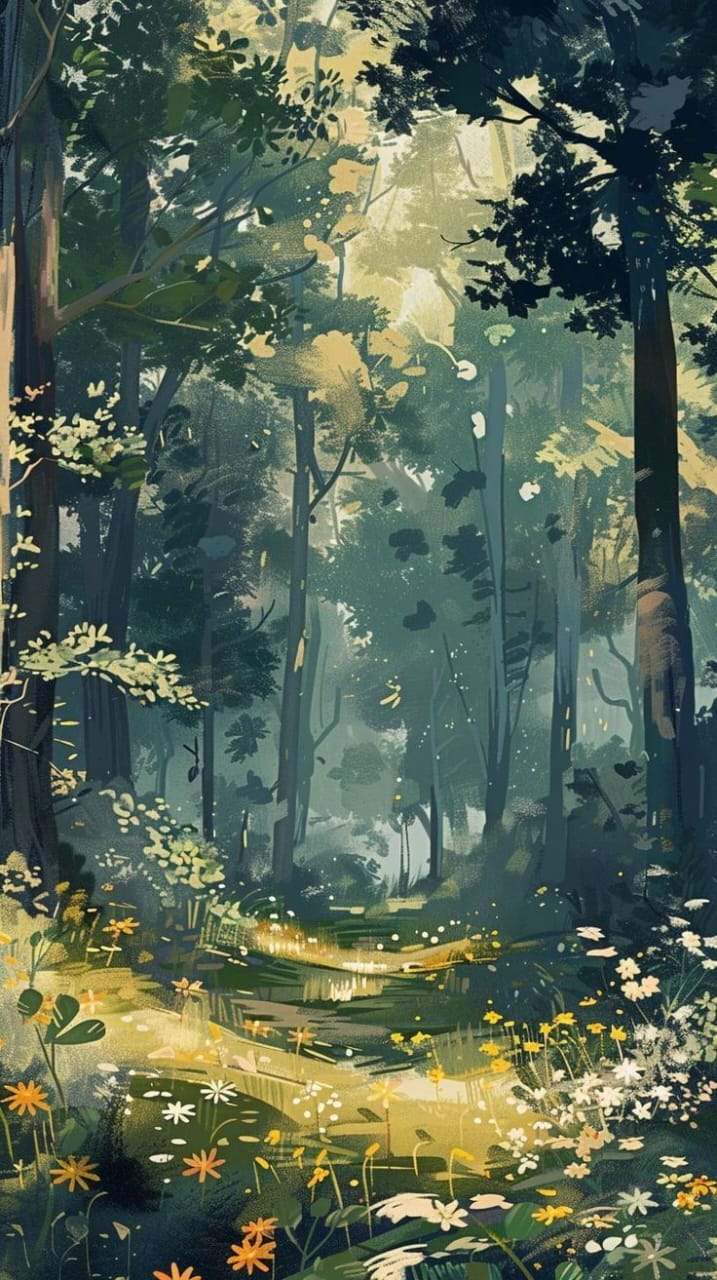
The Forest Grows From the Ground Up
When people imagine a forest, they usually think about towering trees, dense canopies, and abundant greenery. While trees are among the most visible features of a forest, they are not where a forest truly begins.
A forest starts much lower—at the soil surface.
Before large trees can thrive, the land must first support countless smaller forms of life that prepare the foundation for a healthy ecosystem. Soil organisms, grasses, herbs, shrubs, insects, and fungi all play critical roles in creating the conditions that allow forests to emerge and flourish.
Nature Builds in Stages
Natural ecosystems do not appear overnight.
Nature follows a gradual process of development known as ecological succession. Each stage creates the conditions necessary for the next stage to occur.
The process often begins with:
- Bare or disturbed ground
- Pioneer plants and grasses
- Organic matter accumulation
- Improved soil conditions
- Increasing biodiversity
- Establishment of shrubs and young trees
- Development of mature forest ecosystems
Over time, the landscape becomes increasingly complex, productive, and resilient.
The Importance of Pioneer Species
The first plants to appear on bare land are often small, fast-growing species known as pioneer plants.
Although they may seem insignificant, these plants perform important ecological functions.
They help:
- Protect the soil from erosion
- Add organic matter
- Improve moisture retention
- Support beneficial microorganisms
- Create habitat for insects and wildlife
By improving environmental conditions, pioneer species prepare the way for larger and longer-lived plants.
Every thriving forest begins with these humble first steps.
Soil: The Foundation of Every Forest
Healthy soil is the foundation upon which all terrestrial ecosystems depend.
Without active soil biology and organic matter, trees struggle to establish and grow. Fungi, bacteria, earthworms, and other soil organisms continuously recycle nutrients and improve soil structure.
As biological activity increases:
- Soil fertility improves
- Water retention increases
- Nutrient cycling becomes more efficient
- Biodiversity expands
The health of the forest above ground is directly connected to the health of the soil below ground.
Biodiversity Creates Resilience
A forest is much more than a collection of trees.
It is a living network of relationships involving plants, animals, insects, fungi, microorganisms, and natural processes.
Greater biodiversity strengthens ecosystem resilience by allowing many species to perform different functions within the landscape.
This diversity helps ecosystems adapt to changing conditions while maintaining stability and productivity.
The Amrut Krushi Perspective
At Amrut Krushi, tree planting is viewed as only one part of the regeneration process.
Equal attention is given to:
- Soil health
- Biomass generation
- Water conservation
- Biodiversity enhancement
- Ecological restoration
These foundational elements create the conditions that allow trees and ecosystems to thrive over the long term.
The objective is not simply to plant trees but to support the entire web of life that sustains them.
Conclusion
A thriving forest is not built from the top down. It grows from the ground up.
Healthy soils, diverse plant communities, active biological processes, and ecological relationships form the foundation of every successful ecosystem.
By nurturing these foundations, we create landscapes that become increasingly resilient, productive, and capable of supporting life for generations to come.
The forest begins long before the first tree reaches the sky.