





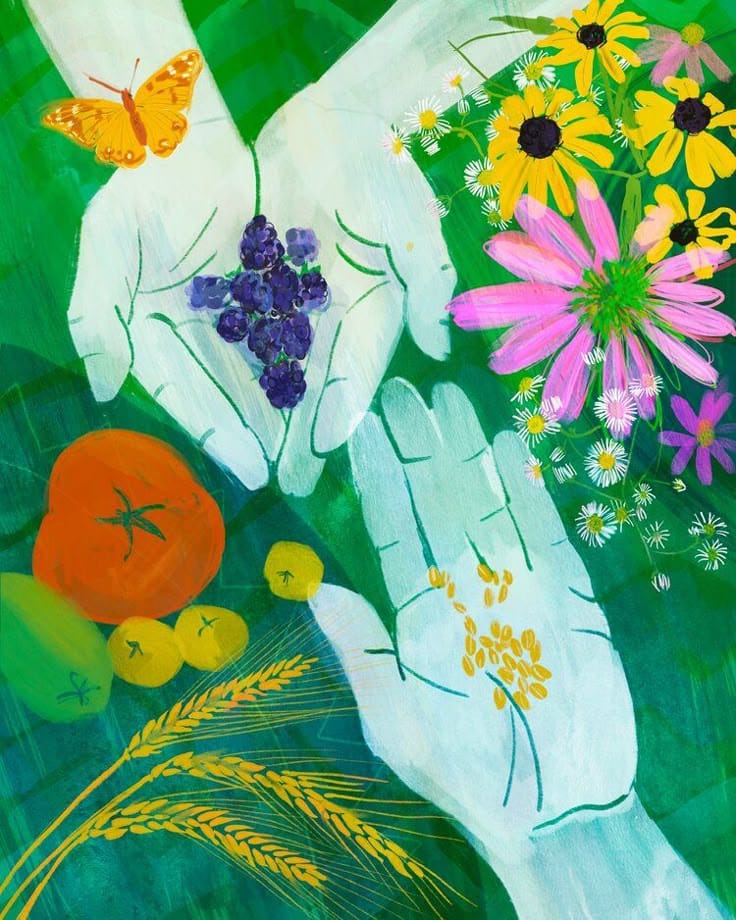
The Language of Flowers
Flowers are more than beautiful decorations in a landscape. They are an important part of nature’s communication system, sending signals that attract pollinators and support the reproduction of plants.
Through their colours, shapes, fragrances, and nectar, flowers provide information and rewards to bees, butterflies, birds, and many other insects. These visitors play an essential role in moving pollen from one flower to another, helping plants produce fruits and seeds.
Flowers Speak Through Colour and Fragrance
Every flower has its own way of attracting visitors. Bright colours can make flowers easier for pollinators to find, while fragrances can guide them toward a source of nectar.
The shape and structure of a flower also matter. Different pollinators are naturally suited to different types of flowers. Some are attracted to open flowers, while others can reach nectar hidden deeper inside.
What appears to us as beauty is therefore also a practical system of communication created by nature.
Pollinators Support Plant Life
Bees, butterflies, birds, and other insects are not simply visitors to a flowering landscape. They are important participants in the life cycle of many plants.
When pollinators move between flowers, they help transfer pollen. This process allows many plants to produce fruits and seeds, which are essential for continuing plant life and maintaining biodiversity.
Without healthy pollinator populations, the natural reproduction of many plants can be affected.
A Flowering Landscape Is Full of Life
A landscape rich in flowers often supports much more than plants. Flowering areas can provide food and habitat for a wide range of insects, birds, and other organisms.
As these different forms of life interact, they contribute to a more diverse and balanced ecosystem. This diversity can strengthen the ecological relationships that support healthy agricultural landscapes.
A flower may appear small, but its role can extend far beyond the plant itself.
The Amrut Krushi Approach
At Amrut Krushi, flowering plants are intentionally grown throughout the farm, not only for their beauty but also to create supportive conditions for pollinators and biodiversity.
By allowing flowering plants to become part of the agricultural landscape, the farm creates opportunities for pollinators to find food and continue their natural activities.
This approach reflects an important principle of regenerative agriculture: healthy farming is not only about growing crops. It is also about creating conditions where different forms of life can coexist and contribute to the health of the ecosystem.
Every Flower Is an Invitation to Life
Flowers connect plants with the wider living world. Their colours, shapes, fragrances, and nectar invite pollinators into a relationship that supports reproduction, biodiversity, and the continuation of life.
A flowering landscape is therefore more than a beautiful landscape. It is a living network of relationships.
Every flower is an invitation to life.