
The Living Laboratory
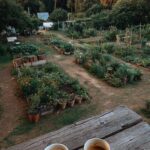
A farm is more than a place where crops are grown. It is a living laboratory where every season brings new discoveries.
Every day, nature presents new opportunities to observe, experiment, and learn. A simple change in farming practice can reveal valuable insights that improve soil health, conserve water, increase biodiversity, and strengthen the entire ecosystem.
In regenerative agriculture, learning never stops because nature is always evolving.
Every Observation Has Value
Progress begins with careful observation.
A new mulching method may improve soil moisture.
A different tree species may attract more birds and pollinators.
A composting technique may produce healthier crops.
Changes in rainfall, soil condition, or biodiversity may reveal new opportunities for improving the landscape.
Every observation adds to our understanding of how natural systems function.
Learning Through Experience
A regenerative farm is a place where knowledge grows through experience.
Every success provides confidence to continue.
Every challenge offers an opportunity to improve.
By carefully documenting observations and learning from both positive and unexpected outcomes, farmers develop practices that become more effective over time.
Experience is one of the greatest teachers in agriculture.
Research Beyond the Laboratory
Scientific research is not limited to laboratories or research institutions.
It also happens:
- In healthy fields
- Beneath living soil
- Around growing trees
- Near water harvesting systems
- Through daily observation of nature
Every part of the landscape provides information that helps improve farming practices and deepen our understanding of ecological processes.
Nature Is the Greatest Teacher
Nature has been refining its systems for millions of years.
Healthy forests, fertile soils, flowing rivers, and diverse ecosystems demonstrate solutions that have stood the test of time.
By observing these natural systems with curiosity and respect, we can develop farming practices that work in harmony with the environment instead of against it.
The best ideas often come directly from nature.
The Amrut Krushi Perspective
At Amrut Krushi, research is not confined to notebooks or laboratories.
It happens in the fields, among the trees, and beneath our feet. Every success and every failure is carefully observed because both provide valuable lessons. As a Natueco Science Research Centre, the farm encourages continuous learning through observation, experimentation, and thoughtful application of nature’s principles.
Every season brings another opportunity to discover something new.
Conclusion
A living laboratory has no walls.
It exists wherever people observe nature with curiosity, document their experiences, and apply what they learn to improve the land.
The greatest laboratory is the living landscape itself, where every season, every plant, and every ecosystem continues to teach those who are willing to learn.