

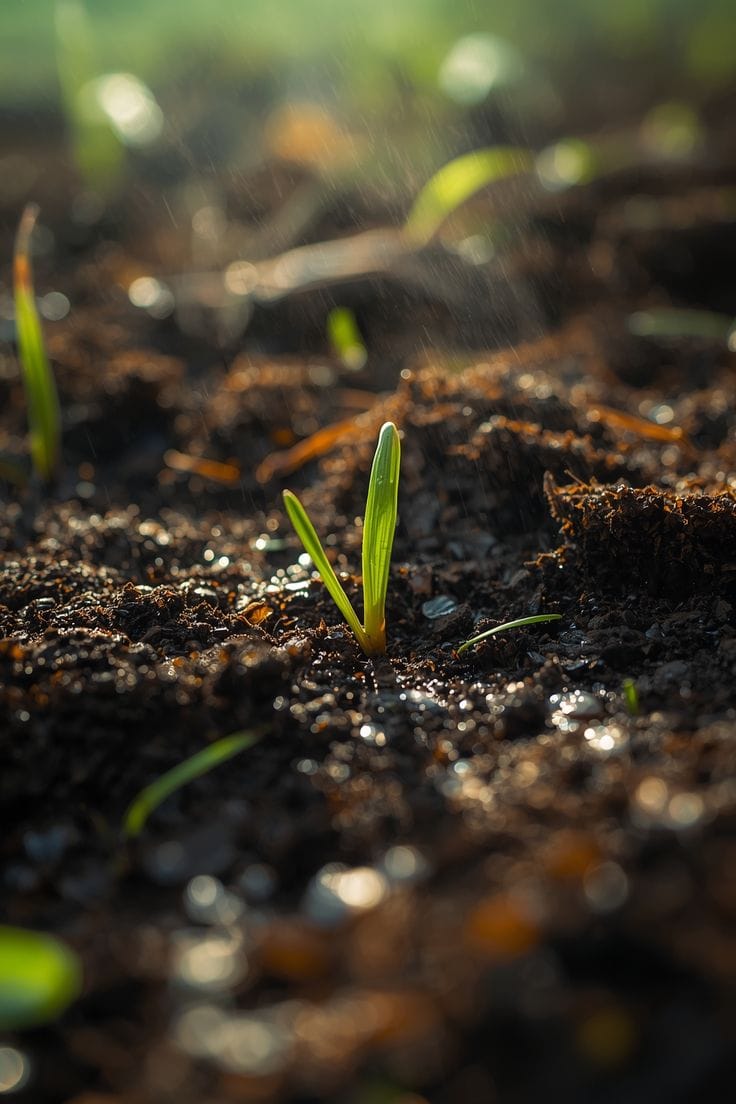
The Soil Breathes Too
Just like humans need air to survive, soil also needs to breathe.
Healthy soil contains countless tiny spaces filled with both air and water. These spaces allow plant roots to grow deeply, earthworms to move freely, and beneficial microorganisms to carry out the natural processes that keep the soil fertile. When the soil becomes compacted, these air spaces are reduced, limiting the movement of water, oxygen, and living organisms.
In regenerative agriculture, maintaining well-aerated soil is essential for creating healthy and resilient ecosystems.
Healthy Soil Is Full of Life
Soil is much more than a medium for growing plants.
It is a living ecosystem where billions of microorganisms, fungi, insects, and earthworms work together to recycle nutrients, improve soil structure, and support healthy plant growth.
When soil has enough air and moisture, this underground community thrives, strengthening the entire ecosystem.
Why Soil Aeration Matters
Air spaces within the soil perform several important functions.
They help to:
- Supply oxygen to plant roots
- Support beneficial microorganisms
- Allow earthworms and other soil organisms to move freely
- Improve water infiltration and drainage
- Encourage deeper root development
- Build stronger and healthier plants
Healthy soil breathes naturally, creating ideal conditions for life below the surface.
Protecting the Soil’s Structure
Compacted soil restricts the movement of air and water, making it difficult for plants and soil organisms to thrive.
Regenerative farming helps preserve soil structure through practices such as:
- Adding compost and organic matter
- Growing deep-rooted plants
- Applying mulch to protect the soil surface
- Reducing unnecessary soil disturbance
- Encouraging earthworm activity
These natural methods improve soil aeration while strengthening its long-term health.
Working With Natural Processes
Nature has its own way of maintaining healthy soil.
Earthworms create tunnels that improve aeration and water movement.
Plant roots open pathways through the soil while adding organic matter as they grow and decompose.
Mulch protects the surface from erosion, conserves moisture, and supports biological activity.
By working with these natural processes, farmers can improve soil health without disturbing its living ecosystem.
The Amrut Krushi Perspective
At Amrut Krushi, soil is never viewed as an inert material.
It is recognised as a living, breathing ecosystem that supports every aspect of regenerative agriculture. Through composting, mulching, biomass recycling, biodiversity conservation, and minimal soil disturbance, we work to protect the natural structure of the soil and create conditions where life can flourish beneath the surface.
Healthy soil is the foundation of a healthy landscape.
Conclusion
The soil breathes too.
When air, water, roots, and living organisms move freely through healthy soil, ecosystems become stronger, crops grow more successfully, and biodiversity flourishes.
By protecting the soil’s natural structure, we create fertile land that continues to support life for generations to come.